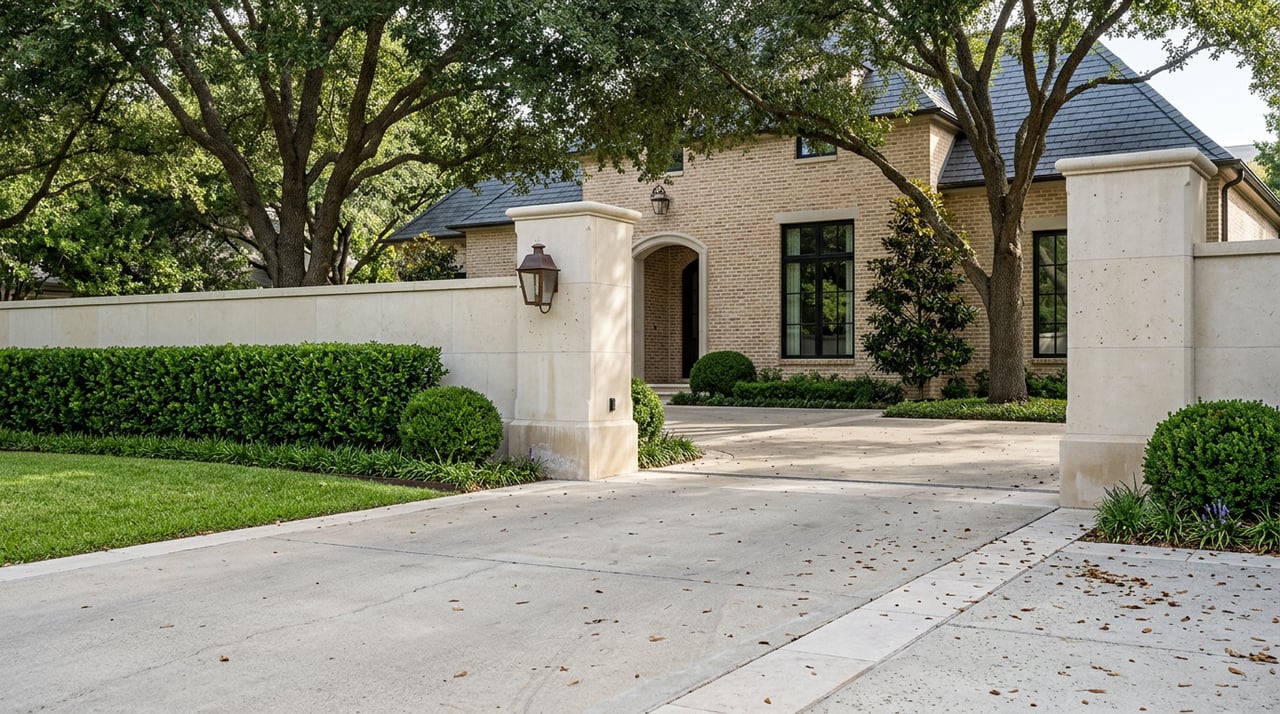
In early May, someone taped handwritten signs to the DART bus stop poles along Preston Road. They told riders waiting for Route 237 what months of town council meetings and a special election had already decided: after May 14, the bus wasn't coming back. For a town of roughly 9,000 people, it was a strange kind of goodbye, paper notices on a street lined with hedges and limestone gate piers, announcing the end of a service most residents rarely used and the start of one most hadn't tried yet.
If you live in Highland Park, you've probably noticed the absence by now more than the replacement. The bus doesn't stop. The GoLink zone is gone. What showed up instead, a city-run ride service called Highland Park On-Demand, has been quietly running for three months. Here's what it actually does, what it costs, and why the answer to "what does it cost" is about to change.
Why the Town Walked Away From DART
On May 2, 2026, Highland Park held a special election on a question Texas law allows DART member cities to ask once every six years: stay in the regional transit system, or leave it. Nearly 70 percent of voters chose to leave. The same day, Addison voters chose to stay by a similar margin, and University Park's vote was closer, with something like 53 to 54 percent opting to remain, depending on which count you look at.
That split matters because it shows this wasn't a Park Cities consensus. It was Highland Park specifically deciding that a single bus route wasn't worth what the town was paying for it. Highland Park's own DART information page confirms the town had been a DART member since 1983, dedicating one cent of its local sales tax to the system every year since. The withdrawal makes Highland Park the first city to leave DART since Coppell and Flower Mound did the same back in 1989.
What Actually Disappeared on May 14
DART service in Highland Park ended just after midnight on May 14, the day after the town council canvassed the election results. Specifically, that meant:
- Route 237, DART's only fixed line through town, stopped making stops on Preston Road, though the bus itself still passes through on its way elsewhere
- The Park Cities GoLink zone, DART's on-demand rideshare-style service, stopped operating inside town limits
- All DART paratransit trips beginning, ending, or passing through Highland Park ended
- Any DART park-and-ride facilities within town limits came off the network entirely
Riders who depended on DART for trips beyond Highland Park were told to plan routes from stops outside town, or to call DART's customer service line directly.
How Highland Park On-Demand Actually Works
The replacement launched the same week the old service ended. It's run through Via, a national microtransit operator, under a six-month pilot contract with the town. Here's what that means if you actually want to use it.
You book a ride through the town's app or by calling 214-785-4345. The service runs 5 a.m. to midnight, seven days a week, covering trips inside Highland Park and within about a mile beyond the town's borders, which includes a direct connection to Mockingbird Station. Town leaders have also talked about extending links to Love Field and SMU as the pilot continues, though those weren't live as of this writing. A separate arm, Highland Park Access, handles paratransit for riders with mobility needs and is designed to keep covering trips that start or end in Highland Park across all 12 DART member cities, the way DART's paratransit used to.
The Free Ride Has an Expiration Date
Here's the detail that's easy to miss if you only skimmed the launch coverage. The town council originally proposed a flat $3 fare, roughly matching what DART charged locally. Then, at the meeting where they finalized the service, they changed course and made rides free for the duration of the pilot. The reasoning, according to town officials, was straightforward: they didn't want DART riders who'd already paid into the old system to pay twice on their way into the new one.
That six-month clock started on May 13. Run the math and the free period is scheduled to end in mid-November, right around the point the town will be deciding whether to keep the service, adjust it, or fold it into something else. Nothing about that decision has been made public yet, but the free rides were framed from the start as a pilot feature, not a permanent one. If you've been meaning to try it, this fall is probably the window.
The Math That Made the Case
Town officials have been fairly candid about the numbers behind the decision. Highland Park paid a little over $8 million in sales tax to DART in 2025 and was on pace to contribute another $9 million to $10 million this year. In exchange, the town's single fixed route was averaging around 35 boardings on a typical weekday, according to DART's own ridership figures.
Set against that, the six-month Via pilot is projected to cost around $417,000, or roughly $750,000 if the town extends it for a full year. Mayor Will Beecherl put it plainly at the time: running Via, he said, is going to be a whole lot cheaper than paying DART's $8 million bill.
Whether that math holds up depends on things the pilot hasn't tested yet, like ridership at scale or what happens once the free rides end. But for now, the town is paying a fraction of its old transit bill for a service that reaches more of Highland Park than one bus route ever did.
What the Town Still Owes
One nuance that's easy to lose in the "Highland Park quit DART" framing: leaving doesn't mean the bill stops. Under Texas law, DART calculated Highland Park's proportional share of the system's outstanding bonds, contracts, and other long-term obligations, an amount estimated at $30 million to $40 million. The state comptroller will keep collecting the town's 1 percent DART sales tax until that obligation is paid off, which, based on recent collection rates of around $8 million a year, could take several years.
So the town isn't out from under DART's finances entirely. It's paying down a fixed exit bill on the old system while simultaneously funding a new one, at least for now.
A Builder Shuttle Might Be Next
One idea still working its way through council isn't about commuters at all. Town leaders have floated a "Workforce Circulator," nicknamed the builder shuttle, that would move construction crews from off-site parking to job sites around town. The goal is fewer contractor trucks parked along narrow residential streets and clearer routes for emergency vehicles, a practical concern in a town where teardown-and-rebuild projects are a constant backdrop. The proposal hadn't returned to council for a vote as of this writing, but it's worth watching if you live near an active build site.
What This Means for Your Week
If you're in Highland Park, the practical takeaway is simple: there's a free, on-demand ride service covering the town and reaching Mockingbird Station, and it's worth using while the pilot lasts. If you rely on paratransit, Highland Park Access is built to function much like DART's did. And if a work crew's parked truck has been narrowing your street, the town is at least talking about a fix.
None of this changes what makes Highland Park worth living in day to day, the parks, the walk to the Village, the quiet of Beverly Drive on a Sunday morning. But it does change how you get from one part of that life to the next, at least until November.
If you're weighing what any of this means for your own plans in Highland Park, whether that's a move you're considering or just questions about the neighborhood, The Ryan Group knows this market the way only people who live in it can. Schedule a free consultation whenever you're ready to talk.